Pich

Benefits of Lime Fruit

Citric acid is a natural inhibitor of kidney stones made of crystallized calcium. Go for fresh lime juice squeezed into water, as opposed to commercial limeades, for maximal benefits. Limes may lower cholesterol.

Health Benefits of Lime Fruit aids digestion, peptic ulcer. Limes are anti-carcinogenic and beneficial for your eyes. Helps maintain normal blood pressure. Lime balances pH level, weight reduction. Lime treats swelling of feet. Good for liver health and help cure infections in the urinary system.


Limes deserve to be in the limelight. Originating from Southeast Asia, the potential uses of limes go far beyond cocktails and fish tacos. You might be surprised by the many unique ways in which limes can be used to benefit your health.

1. Sweet Benefits
As natural health approaches become more and more popular in today’s culture, lime will likely play an increasing role in the treatment that doctors recommend. Scientists are researching ways to incorporate lime into medicines and herbal formulas. 

2. Sickle Cell Solution
Sickle cell anemia is a condition that causes the bone marrow to produce misshapen, sickle-shaped red blood cells. It can cause chronic fatigue as well as painful episodes, called crises.

Crises cause severe pain in areas such as the chest, joints, or lower back. A study found that consuming lime juice reduced the severity of crises in children with sickle cell anemia.

3. Keep Your Heart in Lime
Antioxidants keep your arteries healthy, and healthy arteries are essential for carrying blood from your heart to the organs of your body. A new study conducted on rabbits reveals some interesting results.

Lime peel and lime juice contain antioxidants that slow down the process of atherogenesis, the buildup of plaque on artery walls. Try getting more lime juice in your diet with this delicious grilled shrimp recipe.

4. Kaffir Limes Fight Harmful Bacteria
The same study also found that the kaffir lime, a bumpy-skinned lime grown in India and other regions of Southeast Asia, fights bacteria. One specific type of well-known bacteria this lime fights is E. coli, which causes food poisoning.

5. Put Your Complexion in the Limelight
The antibacterial properties of kaffir lime extend to the skin, too. In a 2014 study, researchers found that essential oil from the kaffir lime could stop acne-causing bacteria. The oil also reduced scarring from acne and assisted in healing acne blemishes. This natural remedy is an option worth trying if you want to improve your skin.

6. A Little Can Go a Long Way
Lime’s bacteria-fighting abilities also enable the fruit to fight cholera, according to one study. Bacteria that cause cholera often travel in food. In West Africa, where cholera outbreaks have happened in recent history, researchers found that feeding affected people lime juice with rice killed the dangerous bacteria.

7. A Comp-Lime-Ment to Your Food or Fragrance
The peel left behind after a few good squeezes can be used to create a powerful, pure oil. This oil is used in a number of ways, most popularly in flavoring food and adding a fresh fragrance to a variety of products. Try this recipe for an amazing lime-filled twist on hummus.

8. A Blast of Important Vitamins and Minerals
Similar to other citrus fruits, lime offers a plethora of vitamins and minerals, including potassium. Potassium is important for maintaining nerve function and healthy blood pressure levels. The fruit is also linked to antioxidants and bioflavonoids that researchers believe could lower the likelihood of cancer.

There are many ways to put this fruit to use. As a member of the powerful citrus family, the list of lime’s benefits only continues to lengthen as researchers delve further into the science behind the fruit.

The simplest way to use lime is to add it to your cooking. Start with this sweet potato and black bean burger recipe. The next time you’re at the grocery store, you may want to consider grabbing a few limes to add a final touch of flavor to your meal.


Read More
Pich

Benefits of Durian

Durian is naturally rich in potassium, dietary fibre, iron, vitamin C, and vitamin B complex. The king of fruits is thus excellent for improving muscle strength and blood pressure, bowel movements and skin health. It also supports the nervous and immune systems, and enhances red blood cell formation.

Durian Acts as a natural anti-depressant. Durian Fruit is good for Bone health. Preventing and treating constipation. Durian Fruit Help maintain thyroid function. Helps relieve migraine. Durian is an instant energizer. Durian Fruit is Good For a healthy digestive system muscles, sexual dysfunction.


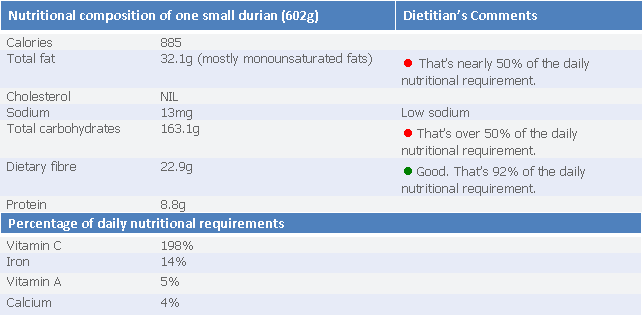
Contrary to popular belief, you will not have a big spike in your cholesterol level after eating a durian. In fact, this king of fruits has good monounsaturated fats that can actually lower your harmful cholesterol levels and moderate your high blood pressure.

But feasting on this highly nutritious fruit will certainly not benefit your waistline. A durian can have anywhere from 885 calories to 1,500 calories depending on its size. Durians may be a very good source of nutrients, but they are also high in calories and carbohydrates and thus must be consumed with moderation.

Facts and myths about durian

Durian facts

1. Durian can cause weight gain
With an average 1 kg sized durian having close to 1,350 calories, eating one durian can rack up as much as 68 per cent per cent of the daily 2,000 calories recommended for an average adult! One seed durian (about 40 g) has 54 calories.

2. Durian is rich in nutrients
Durian is naturally rich in potassium, dietary fibre, iron, vitamin C, and vitamin B complex. The king of fruits is thus excellent for improving muscle strength and blood pressure, bowel movements and skin health. It also supports the nervous and immune systems, and enhances red blood cell formation.


3. People with diabetes must limit their durian intake
If you have diabetes and must count your carbs, you cannot feast on durians because of the fruit’s high sugar content. Durians contain simple sugars – sucrose, fructose and glucose.

4. Durian is an instant energiser
Because of their high carbohydrate content, durians can help replenish low energy levels quickly (in healthy individuals). The fruit’s high potassium content can also help reduce fatigue and relieve mental stress and anxiety.

Durian myths

1. Durian is loaded with cholesterol      
Not true. Durians have zero cholesterol. Cholesterol is found in foods containing saturated fats such as red meats, seafood and dairy products. Durians have heart-healthy monounsaturated fats which help to lower your levels of bad LDL cholesterol.

2. Mangosteen must be eaten with durian to reduce heatiness
According to conventional Chinese wisdom, a mangosteen, being a cooling fruit, will reduce the heatiness associated with durians. However, there is no scientific research to support this. The habit of eating durians and mangosteens together probably stems from the fact that the two fruits are harvested at about the same time.
3. Eating durian and drinking beer at the same time may kill you
There is no scientific evidence to show that this is a lethal combination. It is more likely to cause bloating, indigestion and discomfort as your liver has to work extra hard to metabolise both fats and sugars in the durians and the alcohol, especially if you have consumed both in excessive amounts.

4. Eating durian can boost your libido
The heatiness in the durian may cause your body temperature to rise, but this does not make the fruit an aphrodisiac.
Despite the myths associated with the durian, it remains a highly prized fruit.

Final message from our dieticians:
The durian is a highly nutritious fruit which, when eaten in moderation, will provide the body with many minerals, vitamins and good fats. Eating two to three seeds of durian at one sitting is sufficient, but because durians can become so addictive, people tend to eat more than they should.

Read More
Pich

Benefits of Coconut

Health benefits of Coconut Water prevents urinary tract infection. Coconut Water is extremely beneficial during pregnancy. It is good for your heart. Coconut Water Helps to lose weight, Hydration. Coconut Water is rich in Antioxidants. Coconut Water Regulates blood pressure. Remedy for Diarrhea, Coconut Water helps Digestion. Reduces the risk of kidney stones.


Is coconut water good for you?

Advocates say coconut water - the clear liquid inside a young coconut - is a nutritional goldmine. Already popular in Brazil, where sales top $300 million a year, coconut water is one of the fastest-growing new food categories in the UK and sales doubled in the US last year, thanks to investment by Coca-Cola, PepsiCo and Madonna, who poured $1.5 million into the brand Vita Coco and convinced Matthew McConaughey and Demi Moore to do the same.
Not to be confused with coconut milk, the fattier, pulped coconut meat, pure coconut water has been available fresh from health food outlets and in pre-packaged form in Asian supermarkets for years, and has just made its Australian debut in general supermarkets.
The Jamaicans use it as a heart tonic and the United Nations' Food and Agriculture Organisation says it's full of natural electrolytes.
But Tania Ferraretto, an accredited practising dietitian with Nutrition Professionals Australia, says, "At this point I wouldn't recommend coconut water to my clients." Aloysa Hourigan, senior nutritionist with Nutrition Australia, agrees. "I think the claims for coconut water are probably overrated. It's unlikely to be harmful and it has got some mineral component, but it doesn't have a high nutritional content."

Health claims

It's a low-fat health drink. Deemed a healthy alternative to sugar- and kilojoule-packed soft drinks and juices, pure coconut water is a natural beverage with no artificial additives or sweeteners. It's cholesterol free, 99 per cent fat free, low in carbohydrates and naturally occurring sugars and has less than 100 kilojoules per 100ml (most flavoured varieties use 100 per cent fruit extracts).
It also boasts zinc, selenium, iodine, sulfur, manganese, boron, molybdenum, ascorbic acid and B-group vitamins. But Hourigan says the latter two are not at a substantial level and Ferraretto warns that the bottled source may not be as good as the real deal. "What's the shelf life for all these components and are they still active when they've been on the shelf for a while?" she asks. She says you also need to remember that coconut water is not kilojoule free.

It's better than a sports drink

Dubbed "nature's Gatorade", coconut water is a natural isotonic drink that provides many of the same benefits as formulated sports drinks, including the electrolytes calcium, magnesium, phosphorus, sodium and potassium, but in their natural form.
"While it's a marketing advantage to say it's natural, in the real world your body doesn't distinguish between the electrolytes coming from coconut water or from a sports drink," says Ferraretto. And while a small Malaysian study found it caused less nausea, fullness and stomach upset than sports drinks, and could be used for whole-body rehydration after exercise, she would not yet recommend it for athletes.
"Although it does provide electrolytes and a little bit of carbohydrate, a sports drink is specifically formulated for athletes and the electrolytes and carbohydrates are at the right level." She says the rest of us get all the hydration and electrolytes we need from a healthy diet.

It slows down ageing

Fans say coconut water can promote smoother, more youthful-looking skin. They claim it's a natural source of cytokinins, a group of plant growth hormones that help regulate cell growth, development and ageing. Rich in  potassium, antioxidants and lauric acid, cytokinins are said to balance pH levels, strengthen and hydrate connective tissues and even reduce the risk of age-related diseases. Dab it onto skin and you may also reduce acne, cellulite, eczema, stretch marks, wrinkles, age spots and sagging skin. But Hourigan says no scientific studies back any of this up.

It's almost as good as a blood transfusion

According to the UN, coconut water's chemical profile is so similar to blood plasma it has been used intravenously to save lives in developing countries and during World War II. In the Pacific, it was siphoned  directly from the nut to provide emergency transfusions for wounded soldiers. It is also used as a home remedy for dehydration-related ailments such as cholera and gastroenteritis, although a West Indian study warned against using it in severe cases. "When medical saline isn't available it can replace water and salt," Hourigan agrees. "But it doesn't contribute enough glucose."

Regulates blood pressure, blood sugar and cholesterol

Research shows that coconut water can improve blood circulation, lower elevated blood pressure and reduce the risk of heart attacks and strokes, says Dr Bruce Fife, director of the Coconut Research Center and author of Coconut Water For Health And Healing (Perfect Paperback). Advocates also claim it helps increase HDL (good) cholesterol, reduces plaque formation, moderates sugar absorption and improves insulin sensitivity. "People at risk of high blood pressure and stroke need more potassium and less sodium, but I'd like to see more studies on [coconut water and] cholesterol and diabetes,"  Ferraretto says.

Good for digestive and urinary health

Coconut water claims to be a cure-all for a range of digestive and urinary ailments and has been used in the tropics to treat stomach flu, dysentery, indigestion, constipation, intestinal worms, bladder infections and malfunctioning kidneys. It's a natural diuretic and is said to prevent urinary tract infections (UTIs) and kidney stones. Research from the Philippines found drinking coconut water up to three times a week may reduce stone size and the need for surgery.
Ferraretto argues that water is better for hydration and urine flow and says if you're worried about UTIs, try cranberry juice. "We know there's some evidence there," she says. Coconut water is considered safe for children as well as pregnant and breastfeeding women and there are no known side effects, however there are some things to watch out for:
The fresher the coconut water, the better. Once exposed to air and warm temperatures, it rapidly ferments and loses its nutritional value. If you have nut allergies, check with your GP. Avoid coconut oil if you have heart disease, kidney disease or are on a low-potassium diet. Regulate your potassium levels if you consume coconut water and potassium supplements, as too much potassium can impact on the heart. It may have a laxative effect.
Read More
Pich

Benefits of Banana

You'll never look at a banana the same way again after discovering the many health benefits and reasons to add them to your diet. Bananas combat depression, make you smarter, cure hangovers, relieve morning sickness, protect against kidney cancer, diabetes, osteoporosis, and blindness. They can cure the itch of a mosquito bite and put a great shine on your shoes. Here are 25 reasons to eat bananas you might have never considered before.


If You Think Bananas Are Just For Monkeys, Think Again
  1. Bananas help overcome depression due to high levels of tryptophan, which is converted into serotonin -- the happy-mood brain neurotransmitter.
  2. Eat two bananas before a strenuous workout to pack an energy punch and sustain your blood sugar.
  3. Protect against muscle cramps during workouts and night time leg cramps by eating a banana.
  4. Counteract calcium loss during urination and build strong bones by supplementing with a banana.
  5. Improve your mood and reduce PMS symptoms by eating a banana, which regulates blood sugar and produces stress-relieving relaxation.
  6. Bananas reduce swelling, protect against type II diabetes, aid weight loss, strengthen the nervous system, and help with the production of white blood cells, all due to high levels of vitamin B-6.
  7. Strengthen your blood and relieve anemia with the added iron from bananas.
  8. High in potassium and low in salt, bananas are officially recognized by the FDA as being able to lower blood pressure and protect against heart attack and stroke.
Eating Bananas Aids Digestion
  1. Rich in pectin, bananas aid digestion and gently chelate toxins and heavy metals from the body.
  2. Bananas act as a prebiotic, stimulating the growth of friendly bacteria in the bowel. They also produce digestive enzymes to assist in absorbing nutrients.
  3. Constipated? High fiber in bananas can help normalize bowel motility.
  4. Got the runs? Bananas are soothing to the digestive tract and help restore lost electrolytes after diarrhea.
  5. Bananas are a natural antacid, providing relief from acid reflux, heartburn, and GERD.
  6. Bananas are the only raw fruit that can be consumed without distress to relieve stomach ulcers by coating the lining of the stomach against corrosive acids. 
Natural Cures From A Simple Banana
  1. Eating bananas will help prevent kidney cancer, protects the eyes against macular degeneration and builds strong bones by increasing calcium absorption.
  2. Bananas make you smarter and help with learning by making you more alert. Eat a banana before an exam to benefit from the high levels of potassium.
  3. Bananas are high in antioxidants, providing protection from free radicals and chronic disease.
  4. Eating a banana between meals helps stabilize blood sugar and reduce nausea from morning sickness.
  5. Rub a bug bite or hives with the inside of the banana peel to relieve itching and irritation.
  6. Control blood sugar and avoid binging between meals by eating a banana.
  7. Eating a banana can lower the body temperature and cool you during a fever or on a hot day.
  8. The natural mood-enhancer tryptophan helps to relieve Seasonal Affective Disorder (SAD).
  9. Quitting smoking? Bananas contain high levels of B-vitamins as well as potassium and magnesium to speed recovery from the effects of withdrawal.
  10. Remove a wart by placing the inside of a piece of banana peel against the wart and taping it in place.
  11. Rub the inside of a banana peel on your leather shoes or handbag and polish with a dry cloth for a quick shine.
Weight Loss
Finding foods to fit into your weight-loss diet can be challenging, but bananas make a perfect fit. Bananas are naturally sweet and can help curb your sweet tooth if you get that afternoon sugar craving. A 6-inch banana has a minimal 90 calories, about one-fourth of the calories you would get from a chocolate candy bar. Additionally, about half of the fiber content in bananas is soluble. When soluble fiber reaches your digestive tract, it absorbs water and slows digestion. Food is forced to sit in your stomach for a while, making you feel full. If you have a banana before lunch, you'll be less likely to overeat when your food comes to the table.

Regularity
Enjoying a banana each day aids in keeping you regular. One 6-inch banana has more than 2.5 grams of total fiber, about half of which are insoluble. As insoluble fiber travels through your digestive tract, it sweeps up waste and helps push it out. You'll have more regular bowel movements that are soft and easy to pass. Keep your bowels healthy by getting 14 grams of fiber in your diet for every 1,000 calories you consume, reports Colorado State University Extension. For example, if you tend to stick to an 1,800-calorie diet, you need about 25 grams of total fiber. You get nearly 10 percent of your daily fiber needs -- for this number of calories -- from one 6-inch banana.

Normal Heart Function
Having a banana at breakfast every day adds a nutrient to your body to support normal heart function. Bananas are rich in a mineral electrolyte called potassium. When potassium enters your body, it absorbs directly into your bloodstream through intestinal walls. Potassium travels around to cells all over your body and dissolves in fluid inside of cells. It travels across cell membranes if needed to keep fluid balanced in and around cells. This process keeps electricity flowing throughout your system, which is required to make your heart beat. In cases of severe potassium deficiency, your heart rhythm may become irregular, which can be deadly. According to the Linus Pauling Institute, you need 4,700 milligrams of potassium on a daily basis. Bananas provide more than 360 milligrams per 6-inch piece of fruit.

Eye Health
Adding a banana to your diet also helps keep your eyes healthy. Bananas have a small amount of vitamin A, a fat-soluble vitamin that is vital for protecting your eyes and normal vision. The term "vitamin A" refers to a series of compounds, including beta-carotene and alpha-carotene. These compounds preserve the membranes that surround your eyes and are a component of one of the proteins that brings light into your cornea. Adequate daily vitamin A intake also lessens your risk of night blindness and is essential for everyday vision. Women require 700 micrograms of daily vitamin A, and men need 900 micrograms, explains the Office of Dietary Supplements. One 6-inch banana has nearly 10 micrograms of vitamin A. Bananas also contain alpha-carotene and beta-carotene, which convert to vitamin A to further keep your eyes healthy.


Benefit of Banana Peels
Banana peels sparkling Trather than an appeal every day for a week on your teeth for about a minute this actually results and teeth whitening which can cost a lot of money otherwise for white and sparkling teeth. The only thing that you have to do is to add the banana peel on your teeth for a few minutes regular imwarren's banana peel helps in removing warts and eliminates the occurrence of new ones for this simply rub appeal on the affected area were tied appeal overnight on him this is one of the simplest ways to use a banana peel for skin pain reliever banana peel is a very good pain reliever next few drops a vegetable oil with banana peel in reply that mixture on the painful area lead the mixture for 20 to 30 minutes.

After 30 minutes your pain will be less best for silver leather and shoot police for instant shine in she'll leather and silver banana peel is a perfect idea just rub the banana peel on the silver leather and shoes to get instant shinning best for abides by bugs banana peel can also be used on the mosquito by banana peel gives instant relief from the pain and itching that is caused due to bug bites temple just massage banana peels on your face and body for five minutes every day to cure pimples on results should be visible within a week keep applying the field till the acne disappears wrinkle banana peel helps to keep your skin hydrated add and akio to mashed banana peel apply this mixture on your face and leave it for five minutes wash off. 

After five minutes psoriasis just apply the peel on the psoriasis affected area banana peel has moisturization properties and also reduces 18s it work quickly heal psoriasis and you can see noticeable results within no time UV protection banana peel Health in protecting the eyes from harmful UV rays make sure you leave the key under the Sun before having the banana peel on the rise it is also proven to reduce the risk of cataracts thanks for watching this video please like share don't subscribe channel for more health steps have a nice day in.

Adding a banana to your daily diet has an array of benefits in your body. Bananas help you reach your weight-loss goals, keep your bowels healthy, provide nutrients that regulate heart rhythm and have vitamin compounds for eye health. Keep a bunch of bananas on your desk at work and replenish your stock each week. You'll be more likely to reach for a healthy banana -- instead of heading to the vending machine -- if you have a bunch sitting in front of you.
Read More
Pich

Why you should eat kumara

In New Zealand, kumara is an age-old crop which remains a firm favourite - with good reason.

History
Maori have grown kumara extensively since bringing it to New Zealand over 1000 years ago. They showed great skill cultivating and storing kumara, and managed to control the potentially devastating kumara caterpillar by using tamed black-backed seagulls. The original kumara were very small but in the early 1850s, a larger American variety was quickly adopted for its superior size and flavour.  The majority of kumara are grown in Northland where the soil and climate are ideal. In other countries, kumara is known as sweet potato.

Varieties
New Zealand kumara are available in red, gold and orange varieties. They each have a different skin and flesh colour, texture and flavour. Red kumara, with red skin, has a creamy white flesh with a firm texture and mellow flavour. The gold-skinned kumara has golden flesh with a soft texture and it is sweeter than red kumara. Orange kumara has orange skin and flesh, a firm texture and the sweetest taste.

Nutrition
About 1/2 cup of boiled kumara (100g ) provides around 300kJ energy, virtually zero fat, 1.8g fibre and small amounts of a wide range of vitamins and minerals. In general, the stronger the colour of a fruit or vegetable, the higher the antioxidant content. This applies to kumara which are generally a good source of a range of antioxidants. Other constituents in kumara have been shown to have anti-cancer and anti-coagulant properties (ie. it stops blood from clotting).

Storage and use
Kumara will retain their flavour and freshness for a week or two after purchase if you keep them in a cool, dark, well ventilated place. Don't store them in the fridge and keep them out of warmer temperatures to avoid sprouting. As with potatoes, if you peel the skin and throw it away, you're throwing away some of the goodness (fibre, vitamins and minerals), so just give kumara a good scrub and trim any bruising or woody bits. Kumara can be used as an alternative in any recipe that uses potatoes. You'll find they generally cook a little quicker than potatoes.

Ways with kumara
  • Add to your mashed potato for a nice flavour change.
  • Kumara wedges are yummy instead of potato wedges. Slice the kumara, lay them on an oven tray and spray with a little oil. Bake in a hot oven.
  • Layer sliced kumara with onion slices and garlic in a baking dish. Pour over a little milk and bake in a hot oven for a kumara gratin.
  • Kumara makes a delicious soup, especially if you add some curry spices.
  • Kumara, boiled and cooled, is a good salad base. Toss kumara pieces with a dressing made from sweet chilli sauce, soy sauce, lime juice and sesame oil. Toss coriander leaves through the salad.


Read More
Pich

Back to basics: Rice

The complete guide to cooking and using this staple food, so it's perfect every time.

Cooking rice is not difficult; it just needs a little care and attention. Rice is satisfying to eat, low in fat, and comes in a number of different varieties. It can be used to create all sorts of tasty dishes. Here we tell you how to cook long-grain, basmati, risotto and sushi rice.

Basic rice rules
  • There is no need to rinse rice bought in the supermarket before cooking in New Zealand as it has been thoroughly cleaned before packaging.
  • Unless specifically stated in a recipe, rice does not need to be soaked before cooking.
  • Always use a heavy-bottomed pan with a tight-fitting lid.
  • Use the correct type of rice for the type of dish you are making. For example, risotto is best made with risotto rice: arborio or carnaroli. Extra flavour can be added to rice by using stock instead of water when cooking.
  • When cooking rice by the boiling or absorption method, never stir the rice during cooking as the grains can split. This causes the rice to become sticky.
  • Rice is cooked when the rice separates well and is not hard in the middle.
  • As soon as rice is cooked, remove it from the pan otherwise it will continue to cook and become overcooked.
  • If you're using the boiling method, drain thoroughly in a sieve or colander taking care that the steam does not burn you.
  • Lightly fluff with a fork before serving.

Different types of rice and uses
As a general guide, different rice suits different dishes.

  • Long-grain, white and brown – salads, stir-fries, pilafs, curries, mince dishes.
  • Basmati – Indian dishes, spicy dishes.
  • Risotto, arborio, carnaroli – risottos, risotto cakes.
  • Sushi rice – sushi and Asian soups.
There are two main ways of cooking rice
Boiling method
The usual way to boil rice is in 5 times its volume of water for 15 minutes. As a guide, for 1 cup long-grain rice use 5 cups of water.

Bring a large pan of water to a roaring boil. Add the rice and return to the boil. Reduce the heat to a simmer and cook for 12-15 minutes, until the rice is tender but firm.

Once cooked, pour the rice and cooking water into a sieve or colander and leave covered for 5 minutes. Fluff up with a fork before serving.

This method can be used for long-grain, brown long-grain and basmati rice.

Approximate boiling times for other varieties:

  • White basmati – 15 minutes
  • Brown basmati – 25 minutes
  • Brown long-grain – 30 minutes

Absorption method
Cooking rice like this means as the rice cooks, it absorbs all the cooking water. For this method of cooking, accurate measuring is very important. As a guide, for 1 cup long-grain rice use 1 1/2 cups water or stock.

Place the rice and liquid in a large saucepan. Bring to the boil over a medium heat. Stir several times. Cover and reduce heat to a low setting and cook for 15-20 minutes. Remove the pan from the heat and leave to stand covered for 5-10 minutes before serving

This method can be used for long-grain, brown, basmati rice and sushi rice.

Approximate cooking times by the absorption method for other varieties:

  • White basmati – 15-20 minutes
  • Brown basmati – 25-30 minutes
  • Brown long-grain – 25-30 minutes

Stock options
  • When cooking rice using the absorption method you can use water or, for extra flavour you can use a flavoured stock. For a chicken stock, use a chicken-flavoured stock cube crumbled into boiling water or a long-life boxed stock such as Campbell's reduced-salt version.
  • For a vegetable stock, the cheapest option is to use vegetable water from vegetables you have cooked. This stock can be used to add flavour to all rice dishes.

Cooking risotto rice
Risotto is made by using arborio, carnaroli or risotto rice, which are all short-grain varieties. The basic recipe is made by gradually stirring hot stock into rice and softened onions using a wooden spoon. The stirring action agitates the starch in the rice and this gives risotto a creamy texture. For successful results, follow these simple guidelines:

  • Keep your stock at a gentle simmer.
  • Use a wide-bottomed pan that will be large enough to accommodate the rice, liquid and the additional ingredients. Stir with a wooden spoon.
  • As a guide, 1 1/2 cups risotto rice needs about 3 cups of hot stock.
  1. Soften finely chopped onion in olive oil in a large pan. Add risotto rice. Use a wooden spoon to stir rice with oil and onion. Cook for a few minutes until rice is coated.
  2. Add a ladleful of stock to pan – it should sizzle when added – and stir with a wooden spoon.
  3. Continue adding stock in this way – as stock is absorbed, add more – stirring continuously, until rice has become creamy (you might not need to use all the liquid). It should take around 20 minutes.

Simple sushi rolling
The secret to successful sushi making is to have all your ingredients sliced and the rice cooked before you begin assembly. If you do not have a sushi mat, use a clean tea-towel. Have a bowl of water to hand as wet hands prevent the rice sticking to them so much. You will find all the ingredients for sushi in your supermarket in the Asian aisle.

  1. Once rice is cooked, use a fork or chopsticks to fluff it up. Cool before using.
  2. Lay a sheet of nori, shiny side down, on the centre of a sushi mat or clean tea-towel. Wet your hands and place some of the rice on two-thirds of the nori and press down to cover evenly.
  3. Make an indentation along the top end of the rice and spread with a little wasabi.
  4. Lay a quarter of your fish, meat or chicken and vegetables across the width.
  5. Place your fingers over the filling to hold it in place, then using your thumbs, pick up the nori sheet at the end closest to you (you can use the tea-towel or mat to guide you).
  6. Roll it away from you, pressing in the filling gently as you do so. Continue rolling until the filling is encased in nori, using the mat to help form a firm roll. Unroll the mat. Slice the roll into individual pieces.

Perfect pilaf
Pilaf is a tasty rice dish made using long-grain rice. It is cooked in the oven. As a guide, for 1 cup long-grain rice use 2 1/2 cups hot stock.
  1. Preheat the oven to 160°C.
  2. Heat some oil in an ovenproof dish and cook finely chopped onion until softened. Add the rice and stir with a wooden spoon to coat the grains with the onion. Add all the heated stock to the rice and stir once. Return to the boil. Cover with a tight fitting lid.
  3. Place in the oven and cook for 20-25 minutes or until the rice is tender and all the liquid has been absorbed. Season and serve.
  4. Vary your pilaf by adding diced ham, cooked chicken and vegetables. Or add ground spices and a can of chopped tomatoes.

How to use up leftover rice
  • Once cooled, cooked rice can be stored in the refrigerator for up to 24 hours. It is great for salads and stir-fries. If reheating rice, reheat in a covered bowl in the microwave, or place in a pan with 3 tablespoons water or stock, cover and heat gently for 5 minutes.
  • Make a simple rice salad by mixing a teaspoon of curry powder with 150g low-fat natural yoghurt, a tablespoon fruity chutney and a squeeze of lemon juice. Stir into some cooked rice. Add finely sliced spring onions, slices of mandarin and some unsalted nuts. Serve sprinkled with chopped parsley.

Simple serving suggestion
Courgettes are perfect for filling with this tasty tomato rice filling.
  1. Cut courgettes in half lengthwise, scoop out the flesh and chop. Plunge the courgette shells into a pan of boiling water for 3-4 minutes. Drain and place on a baking sheet.
  2. Finely chop some onion. Cook the onion with the chopped courgette and onion in a little oil until softened. Add a can of chopped tomatoes with herbs and heat for 3-4 minutes. Add some cooked long grain rice and use to fill the shells.
  3. Sprinkle over some breadcrumbs and grated cheese. Season and bake for 20 minutes at 190°C, until the top is golden brown. Serve sprinkled with chopped parsley.


Read More
Pich

Back to basics: Eggs

Eggs can be cooked in minutes and are the perfect base to create endless healthy and economical dishes. Sarah swain takes us through boiling, scrambling and omelettes.

Storage
  • Eggs are best stored in the fridge as their freshness deteriorates at warmer temperatures. Eggs are best stored in the carton.
  • Store them pointed end downwards to prevent breakage and minimise dehydration.
  • Eggs are porous and will absorb strong flavours and smells, so store them well away from strong-smelling foods.
  • Egg yolks placed in a container and covered with water to prevent them from drying out will keep in the fridge for up to two days.
  • Egg whites can be put in a covered container and will keep for up to two days when stored in the fridge.
  • Hard-boiled eggs can be stored in the fridge and used within two days.

Testing for freshness
  • To test for freshness, put an egg in a bowl or glass of water.
  • If it sinks and lies on its side, it is fresh.
  • If it floats with its rounded end on the surface of the water, it is stale.
  • If an egg floats in the middle of the water with its rounded end up, it is not stale but it is probably two or three weeks old.

Boiling eggs
  • Remove the eggs from the fridge about 30 minutes before using.
  • Cover the egg with cold water in a small pan. Cover the pan. Bring the water to the boil. Uncover the pan. Reduce to a simmer.
  • Soft-boiled eggs need to be simmered for 2-3 minutes.
  • Hard-boiled eggs need to be simmered for 8-10 minutes.
  • To shell hard-boiled eggs, as soon as you remove them from the boiling water, crack the shells all over with a spoon and immediately plunge the eggs into a bowl of cold water for a couple of minutes. This helps stop the dark circle forming around the yolk and makes eggs easier to shell.

Scrambled eggs
  • For best results, the eggs should be well beaten with a fork before cooking so the yolks and whites are well mixed.
  • Use a non-stick pan and a wooden spoon.
  • Use a low-fat spread suitable for cooking. I use Logicol.
  • Beat 3 eggs together with 2 tablespoons trim milk.
  • Melt 1 1/2 teaspoons low-fat spread spread in a non-stick pan and run it around to coat the base of the pan.
  • Pour in the beaten eggs and cook them gently, stirring every 20 seconds, ideally with a wooden spoon.
  • The eggs will start to scramble. Continue stirring every 20 seconds until you have the eggs at your desired consistency.
  • Take the eggs off the heat when they are still a little wet if you like your scrambled eggs very moist, as they will finish cooking in their own heat while on the way to the table. Season with black pepper.

Omelettes
  • For 3 eggs (to serve 2 people) use 1 1/2 teaspoons low-fat spread. Beat the eggs thoroughly so that the yolk and whites are well mixed.
  • Melt the low-fat spread in a non-stick frying pan over a moderate heat. Make sure the hob is heating the entire pan base.
  • When the spread begins to foam, add the eggs. Shake the pan to distribute the eggs evenly.
  • After 40-45 seconds the eggs will begin to set on the base in the centre first. Continue to cook over a moderate heat while the entire base becomes set.
  • To test to see if the base is cooked all over, use a palette knife to lift at the edges.
  • At this stage you can add any sliced vegetables you like to create a vegetable omelette. Scatter over evenly.
  • Cook for a further 30 seconds, then use the knife to fold one side of the omelette into the middle. Fold in the other side and serve.

Poaching eggs
A poached egg on toast makes a perfect quick, healthy light meal or breakfast choice. Here's how to get a perfect poached egg:

  • Fill a frying pan with 10cm of water and add a teaspoon of vinegar (this helps the egg keep its shape).
  • Bring the water to a boil. Break the egg into a shallow cup or dish with a lip for easy sliding.
  • Slide the egg into the pan. As soon as the water returns to a boil, cover the pan. Turn off the heat and stand for about 2 minutes, or until a light film of white has set over the yolk. Do not lift the lid until after 2 minutes as the steam helps cook the egg (a glass lid will make this easier).
  • Lift the eggs out with a slotted spoon.

Whisking egg whites
  • For perfect results with egg whites, make sure the bowl and beaters are completely grease-free.
  • Place egg whites in a large bowl. Allow them to come to room temperature.
  • Begin whisking on a slow beating speed, until the egg whites begin to froth.
  • Increase the speed to 2 or 3. After 30-40 seconds, increase to a higher speed. Continuing whisking until you have reached the desired thickness.
  • Soft peaks are ideal for an egg white omelette. Stiff egg whites are ideal for meringues.


Read More
Pich

What to do with canned chickpeas

Quick and easy ways to enjoy these healthy legumes.

  • Make a curry

Cook 2 crushed cloves garlic, 1 chopped onion, 1 teaspoon cumin and 1 tablespoon yellow curry powder in a little olive oil for 1-2 minutes. Add 1 can tomatoes, 1 can drained chickpeas and 500g chopped kumara. Bring to the boil. Reduce heat to low and simmer until kumara is soft.
  • Toss a salad

In a serving bowl, toss 1 can drained chickpeas, 1 can tuna, 1 carrot cut in sticks, 10 halved cherry tomatoes and chopped fresh parsley. Dress with lemon juice and olive oil.
  • Bake a snack

Preheat oven to 180ºC. Drain 1 can chickpeas and arrange on a baking tray. Spray with olive oil. Season with ground coriander and chilli flakes. Bake for 1 hour, or until chickpeas are crisp.
  • Add to soups

Canned chickpeas are a delicious addition to soups. Use them in minestrone instead of kidney beans.
  • Dip into hummus

Using a food processor, blend 1 can drained chickpeas, juice of 1 lemon, 1/3 cup tahini paste, 1 tablespoon olive oil and 2 cloves garlic, until smooth.
  • Make some falafel

Preheat oven to 200ºC. Blend 1 can chickpeas, 1 onion, 2 cloves garlic, 1 teaspoon ground cumin, 1 teaspoon ground coriander and fresh flat leaf parsley in a food processor until smooth. Shape into small patties and bake for 15 minutes or until browned.
  • Mash it up

Use canned chickpeas when making mash instead of potatoes, as a tasty low-GI alternative.
  • Cook a casserole

Fry 2 crushed cloves garlic, 1 chopped onion and 1 sliced chorizo sausage in a little oil. Add 1 can tomatoes and 1 can drained chickpeas. Bring to the boil. Reduce heat to low. Simmer for 15 minutes and serve with rice.
  • Serve a side

Combine 10 halved cherry tomatoes, chopped spring onions, 1 can drained chickpeas and chopped mint leaves. Dress with lemon juice and olive oil to taste.
  • Spread it on

Mash canned chickpeas and use instead of a spread in a wrap or sandwich with fresh salad.

Read More
Pich

What to do with natural yoghurt

We all know natural yoghurt is good for us. These tasty ideas make it easy to get more into your daily diet.

  • Easy dip

For an instant dip, mix low-fat natural yoghurt with sweet chilli sauce. Serve with carrot, celery and cucumber sticks and cherry tomatoes.
  • Potato salad

Next time you make potato salad, replace half the mayonnaise with low-fat natural yoghurt. Or better still, replace mayonnaise dressing with low-fat natural yoghurt mixed with honey, lemon juice and seeded mustard.
  • Savoury sauce

Combine 1/3 cup low-fat natural yoghurt, 1 tablespoon chopped fresh dill or chives, 1 tablespoon fresh lemon juice and 2 teaspoons white wine vinegar. Drizzle over grilled salmon steaks. Replace dill with mint and serve with grilled lamb chops.
  • Quick dessert

Hull and halve 2 punnets of strawberries, sprinkle with sugar and roast in a 220°C oven for 20 minutes, or until soft. Serve with low-fat natural yoghurt sweetened with a little honey and drizzled with pan juices.
  • Slim sweetness

Instead of serving a dessert with cream or ice cream, try serving it with low-fat natural yoghurt or mix low-fat vanilla yoghurt and whipped cream.
  • Savoury topping

Combine 250g low-fat natural yoghurt with 1 crushed garlic clove and 1 tablespoon each chopped flat leaf parsley and coriander (or other herbs of your choice). Perfect for dolloping onto soups, roasted vegetables and couscous salads. Or use it to cool down a spicy dish.
  • Healthy salad

Make a quick salad with a couple of cans of brown lentils or chickpeas, 1 diced tomato and baby spinach leaves or rocket. Dress with 1/4 cup low-fat natural yoghurt combined with 1 tablespoon lemon juice and 1 tablespoon chopped mint leaves.
  • Marinade

Use natural yoghurt as a marinade for chicken or lamb. Add your favourite spices such as paprika, turmeric, cumin and ground coriander seeds and marinate for at least 20 minutes.
  • Basic brekkie

Make an energising breakfast smoothie by blending 1 banana with 1 cup reduced-fat milk, 2 tablespoons low-fat natural yoghurt, 1 tablespoon honey, 1 tablespoon wheat germ and 1 tablespoon sunflower seeds.
  • Low-fat cheesecake

Turn your favourite cheesecake into a low-fat dessert by using low-fat cream cheese instead of the full-fat variety and low-fat natural yoghurt instead of cream.

Read More
Pich

What to do with tahini

Tahini is a very handy ingredient and can be used in many different ways.

The low-down
What is it?
Tahini is a paste made from ground sesame seeds that originates from the Middle East. It's mainly known as a major ingredient of hummus.

Where do I get it?
Tahini can be found in the supermarket in the organic aisle, or with the chutney and pickles. You can buy it 'hulled' (which is lighter in colour and flavour) and 'unhulled' (which is darker and has a more intense flavour).

Ideas for using tahini
  • Spread tahini on toast or sandwiches; it's a great alternative to peanut butter.
  • Add a tablespoon of tahini when making a salad dressing.
  • To take your mash in a new direction, add a tablespoon or two of tahini and a generous sprinkle of ground cumin and sumac.
  • Tahini is great added to noodles or pasta with veges, garlic, lemon and chilli.
  • Make a tahini dip from yoghurt, tahini and lemon juice.
  • Serve with vegetable sticks or over roasted vegetables. See our recipe Roasted butternut with tahini yoghurt.


Read More
Pich

HFG guide to sugar and sweeteners

With so many different sweeteners available, it can be difficult to know which one is best for your needs. Nutritionist Tracy Morris has the answers.

Category 1: Nutritive
Nutritive sweeteners are defined as those that contain energy, and have an impact on blood sugar levels.

Brown or dark brown sugar
What is it? Brown sugar is table sugar coated in sugar syrups that are similar to molasses. This gives it a distinctive colour and aroma, and a moister consistency.

Nutritional properties: Contains nearly the same energy as table sugar, with slightly more nutrients (calcium, iron, magnesium, potassium), but the amounts are insignificant per serve.

Best use: Baking or adding sweetness to savoury dishes such as stir-fries and sauces.

Take note: Don’t let the colour fool you – brown sugar is no more ‘natural’ than white or raw sugar.

Low-GI sugar (eg. Chelsea LoGi Cane)
What is it? A less refined form of table sugar that has a lower glycaemic index (GI 50), so it is digested more slowly than most nutritive sweeteners.

Nutritional properties: The same kilojoules as table sugar but contains small amounts of some nutrients usually removed during processing (antioxidants, calcium, magnesium and potassium).

Best use: Replacing table sugar for people with diabetes.

Take note: Just because it has a lower GI rating does not mean you can eat more of it!

Honey
What is it? A liquid sweetener produced naturally by honeybees from flower nectar.

Nutritional properties: Honey has a low to medium GI rating (between 35-58, depending on the type of honey) and has 92kJ per teaspoon. It contains trace amounts of protein, vitamins, minerals and antioxidants.

Best use: As a truly natural, affordable sweetener. Honey is also used as a natural remedy to soothe sore throats.

Take note: Honey should not be given to infants due to the risk of contracting botulism.

Molasses
What is it? The dark liquid by-product left over from processing sugar cane into table sugar.

Nutritional properties: Molasses has slightly fewer kilojoules than sugar (71kJ per teaspoon), and of all the sugar products, molasses is the richest in minerals calcium, iron, magnesium and potassium.

Best use: Adding a distinctive colour and flavour to baked treats.

Take note: Blackstrap molasses has a bitter taste and it is more often used as a nutritional supplement than a sweetener due to its high antioxidant levels.

Treacle and golden syrup
What is it? Golden-red (golden syrup) or dark brown-black (treacle) liquid sugar made from sugar cane syrup.

Nutritional properties: Sweeter than sugar, these sweeteners are less nutritionally dense than molasses and have small amounts of minerals (calcium, iron and potassium) and 90kJ per teaspoon.

Best use: The strong, sweet taste of these liquid sugars works well in baking and confectionery recipes.

Take note: Treacle is slightly more bitter than golden syrup.

Maple syrup
What is it? An amber-coloured liquid sweetener made from the sap of maple trees.

Nutritional properties: Maple syrup is low GI and it has fewer kilojoules (73kJ per teaspoon) and more minerals than honey but in insignificant amounts per serve.

Best use: Drizzling over pancakes or swirling into porridge.

Take note: Don’t be fooled by ‘maple-flavoured’ syrups which are often higher GI, higher in kilojoules and lower in nutrients than pure maple syrup. Check labels to make sure the product is 100 per cent pure maple.

Table sugar (white or raw)
What is it? A form of carbohydrate (sucrose) made from sugar cane. Raw sugar has a light honey taste and it is slightly less processed than white sugar.

Nutritional properties: One teaspoon has 70kJ.

Best use: Baking, or to add sweetness to a daily cuppa.

Take note: There is no significant nutritional difference between white and raw sugar – both provide a quick energy hit with virtually no vitamins or minerals.

Fructose
What is it? The naturally-occurring sugar in fruit and honey.

Nutritional properties: Fructose is the sweetest sweetener and it has the lowest GI of all naturally occurring sugars. In fruit, it is loaded with vitamins, minerals, fibre and antioxidants. It has 64kJ per teaspoon.

Best use: For a truly natural sugar fix, go for fresh fruit.

Take note: A small amount of fructose (like that in fruit) isn’t going to do you any harm, but if you overload your body with too much at once (often found in processed foods containing ‘fructose’, ‘high fructose corn syrup’ or ‘agave nectar’), your liver starts converting the fructose to fat in the form of triglycerides – putting you at risk of heart disease and diabetes.

Top nutritive sweetener picks
  • Best for baking: White or brown sugar
  • Most natural: Raw honey
  • Most nutritious: Blackstrap molasses
  • Best for spreading: Honey

Category 2: Non-nutritive
Non-nutritive sweeteners are intensely sweet, meaning only a very small amount is needed – so they are virtually kilojoule-free and have no impact on blood sugar levels. With the exception of stevia, most non-nutritive sweeteners are chemically produced.

Aspartame (eg. Equal, NutraSweet)
What is it? An artificial sweetener made by joining two amino acids – aspartic acid and phenylalanine.

Nutritional properties: Provides about the same amount of energy as table sugar, but because it is 160-220 times sweeter than sugar, only a tiny amount is needed, making the energy negligible.

Best use: Aspartame loses its sweetness at high temperatures so it’s not suitable for cooking. It is commonly used in cold food products such as diet soft drinks, cordial and yoghurt.

Take note: People with Phenylketonuria (PKU) – an inherited disorder that increases the levels of amino acid phenylalanine (a building block of proteins in the blood ) – are advised not to consume aspartame as it contains phenylalanine.

Acesulphame potassium or Ace-K (eg. Equal Spoon for Spoon, Sweet One®, Sunnett)
What is it? A synthetically produced potassium salt.

Nutritional properties: Ace-K is 200 times sweeter than sugar and does not provide any kilojoules as it is not broken down by the body.

Best use: Baking, because it is stable at high temperatures.

Take note: In high concentrations it has a slightly bitter aftertaste so it is often blended with other sweeteners to produce a more sugar-like taste.

Sugar alcohols or polyols (eg. sorbitol, xylitol)
What is it? These occur naturally in certain fruits or can be produced artificially from glucose.

Nutritional properties: Provides half the kilojoules of table sugar  but only a small amount is absorbed into the bloodstream.

Best use: Often used to replace sugar in chewing gum, polyols are not broken down by mouth bacteria so they don’t promote tooth decay.

Take note: If eaten in large quantities, they can have a laxative effect and cause diarrhoea, bloating and gas.

Stevia or steviol glycosides (eg. Equal Stevia, NuNaturals Nu Stevia™, Natvia)
What is it? A natural, non-nutritive sweetener extracted from the leaves of the stevia herb.

Nutritional properties: Stevia is 250-300 times sweeter than table sugar, with no impact on blood sugar levels. It has 11kJ per gram.

Best use: People who prefer a natural sweetener over a synthetic one but don’t want the kilojoules.

Take note: Some stevia extracts have a distinct aftertaste similar to liquorice.

Saccharin (eg. Sweet’N Low®, Necta Sweets, Sweet Twin)
What is it? A synthetically produced sweetener made by combining a number of chemicals.

Nutritional properties: Saccharin is 200-700 times sweeter than table sugar and provides no energy.

Best use: Enhances the strength of other sweeteners.

Take note: Not recommended for pregnant women or children under two years.

Cyclamate (eg. Sucaryl, SugarTwin®)
What is it? The sodium or calcium salt of cyclamic acid.

Nutritional properties: Cyclamate is 30 times sweeter than sugar and not digested by most people so it provides no kilojoules.

Best use: Cyclamate masks the bitter aftertaste of other non-nutritive sweeteners so it is often used in combination with other non-nutritive sweeteners.

Take note: Not recommended for pregnant women or children under two years.

Sucralose (eg. Splenda®, Sugar Free Natura)
What is it? Sugar that is chemically processed to replace hydrogen and oxygen molecules with chlorine molecules.

Nutritional properties: Six hundred times sweeter than table sugar, with most of it passing through the body unchanged, providing no energy.

Best use: Since it is the most heat-stable non-nutritive sweetener, sucralose can easily be used to replace sugar (cup for cup) in cooking and baking.

Take note: Sucralose tastes very similar to sugar and has no bitter aftertaste, which is common with other non-nutritive sweeteners.

Top non-nutritive sweetener picks
  • Best for baking: Sucralose or stevia
  • Most natural: Stevia
  • Best for your teeth: Sugar alcohols


Read More